

I rumbled down the gravel-strewn dirt road in the minivan, in and out of the stripes of shade and sun made by the limbs of trees overhead. As I passed underneath the oak tree on the left that hangs over part of the road, I noticed a plastic bag caught on one of the branches by the handle. It was fully open and upright, like someone had been shopping and left it full of air.
I’ve been feeling a bit like that bag lately, just dangling there in the breeze, suspended. Not empty, exactly, but not entirely full either.
Eggelina Jolie, one of our Olive Egger hens, died last week. I didn’t write a note about it because I didn’t know what to say exactly. She just dropped right off the perch sometime in the night and we found her stiff in the coffee ground bedding the next day. The other hens were gathering around and looking at her.
And as my husband and I buried her under the palm tree in the front yard, next to my son’s goldfish and three other hens we’ve buried, I cried briefly. But I also felt an overwhelming sense of resignation to it all — to the relentless realities of life and death, and the endless endings. There are 17 hens left, and as vibrantly alive and adorable as they are currently, each will become an ending, too. It’s a fact inherent to raising animals, especially chickens who drop dead very easily of invisible causes. Eggelina was only a year and a half old.
Endings have been a prominent theme in my life for the past few years. And as I’ve written in other posts, I’ve tried to keep pushing past every ending, loss, and door slamming in my face by moving quickly towards new ideas and visions of the future.
I’ve never been very good at practicing acceptance; in fact I’ve never quite known where the line is between when you should simply accept things and when you should see a setback as a message to push harder. Death, of course, is something that must be accepted. But I’ve always treated every other setback and scene of misfortune as something to be overcome by sheer will and effort. Sometimes it works; but to be perfectly honest, most of my efforts have been nothing more than experiments in how long I can exhaust myself for.
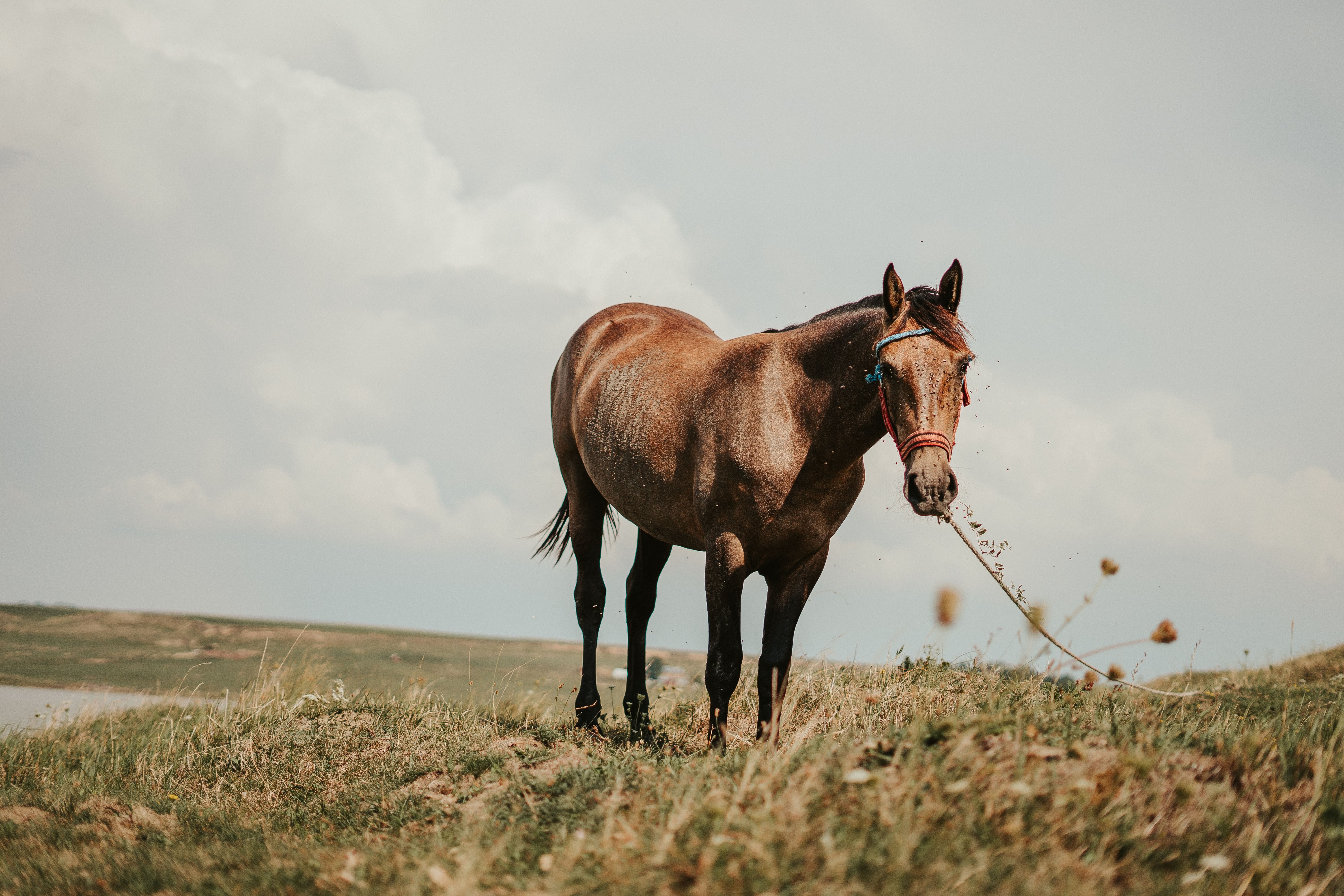
I told my husband the other day that I’m finally broke. Not broken, but broke, like a horse that fought the saddle for so long but finally exhausted itself bucking and is now standing calmly in the round pen, lathered in sweat. In a way, I hate myself for it, for admitting failure. For admitting that I am not, in fact, the architect of my own life. That I don’t have the energy to keep fighting.
But the fact of the matter is, no matter how hard I’ve fought to create different outcomes and opportunities for myself, all that effort has rarely borne fruit.
On the outside, it looks like I’m living the dream, so I’m well aware that I probably come off as ungrateful. I live on a beautiful farm and I have a lovely little family. We can pay our bills, thanks to my husband’s job. Any homesteader trad wife type would be over the moon with this arrangement. I am grateful for my life, but as it turns out, I’m not the homesteader trad wife type, and so it is laced with a tinge of bitterness for me.
It’s hard to fully encapsulate the sense of hopelessness that one feels, scrolling through job boards and realizing that the jobs just don’t exist anymore. That everything you thought you were working for has disappeared — entire industries, thanks to AI — and that to find footing in this new world requires starting over.
But not just starting over like you did in college when you had the freedom to move and could work just about any job, even if it had funky hours. It’s starting over with two kids on different school schedules, in two different schools that require driving to. It’s starting over with therapy appointments in the afternoons and doctor’s appointments during the school day.
It’s starting over with an inconsistent work history, a job history that dates you and a gap in your resume. At some point, you realize that it is literally impossible to be the person pursuing a new career when you are the support person for someone else’s (your husband’s) career, and almost no employer see the things you have to offer — only that your resume doesn’t have the right keywords to pass the automated tracking system.
So I suppose this is where I’m at now. Finally learning the difference between when you should be pigheadedly persistent and when you should just accept certain realities that cannot be overcome by any amount of plucky optimism.
At some point, you take stock of the fact that you’ve tried so hard to create your own path over the years and never quite managed to get there — even as you’ve watched other people succeed. You realize that the input doesn’t equal the outcome, and that the only thing you haven’t tried so far is simply not trying.
So, what else does one do? I’m learning to accept the new version of my life that no longer centers a particular vision. I wake up and feed the chickens and horses. I get my kids ready for school. I pack up eggs and bring them to the food bank. I mow. I clean and do the laundry, I shop for groceries and I cook. I take my Gaelic lessons. And I write, because it is the only thing left that is truly mine to determine its outcome.
And shouldn’t that all be enough? Isn’t it? In a strange twist, this incredibly hard freefall through life has managed to break away layers of what I thought it was supposed to be about — about having a vision, a purpose, a career, making a mark for yourself, financial self-sufficiency. Despite every effort, I’ve landed in exactly the same place I’ve been trying to avoid my whole life: financially dependent on a husband and serving out mostly domestic duties.
And while we could probably discuss ad nauseum how our patriarchal society, the shit-tastic economy we’re currently in and AI are the real architects of my circumstances, there’s also a philosophical debate to be had about what really matters, anyway. Was I hoping for too much in wanting a real modern-day career? Isn’t day-to-day living enough? Have we placed too much value on work? Shouldn’t taking care of the children and the animals be enough? Shouldn’t having a family be enough? If you zoom all the way out, it seems like it should be.
It’s worth questioning, although lately I’ve realized that it doesn’t even matter if I question it: my reality is my reality, and I’m filled with a quiet acceptance about it that I’ve never felt before. This filly is now fully broke. And while a part of me still chafes at the notion, there’s also a freedom in surrender, in finally resigning from the fight upstream. Letting go means I can finally rest.
Like the plastic bag dangling from the tree, I sit and allow the sun to fill me, and the breeze to buffet me. Sometimes, I suppose, survival — existing — is enough. It has to be.
Yes. Write a book. How about a story like yours blended with a story similar to Jess Pipers? But add some nefarious characters (rotten politicians?). Unearth some crime.
Your way with words is a tool.
Also. As the the kids get older, your life will change. My wife launched a new career in her early 40's. Then another one when they went off to college.
You're just getting started. And you have more talent in one boot than most people can imagine.
But Cass! Now you have time to write a book! What about it?
Janet